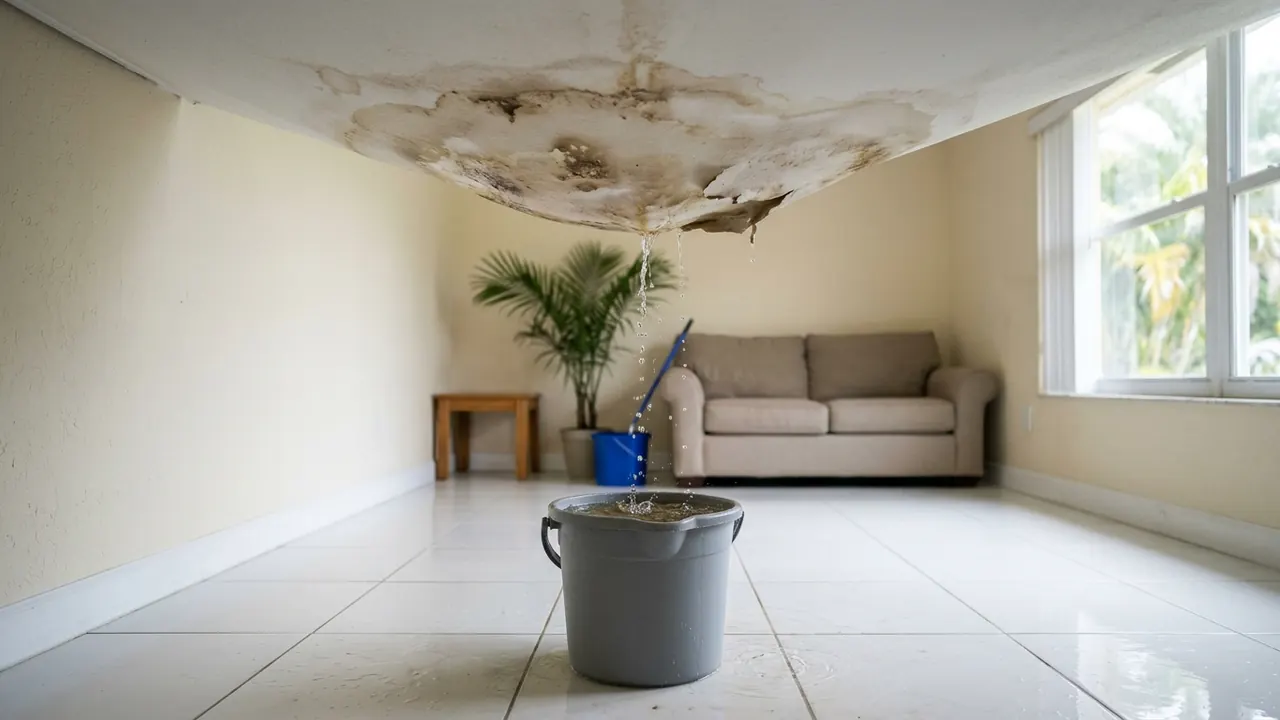
Ceiling water damage means water has collected above or inside the ceiling drywall, usually from a roof leak, an attic air handler or a bathroom or unit above. If the ceiling sags, keep everyone out from under it and don't poke it while standing below. Find and stop the source, then dry or replace the wet drywall and insulation. Call (786) 732-2700 for same-day service in Tamiami.
Water coming through the ceiling? Do this
A sagging ceiling can collapse. Keep people and pets out of the room, move valuables, and don't stand under a bulging spot. Turn off power to ceiling lights or fans in that area if water is near fixtures.
- Find the likely source: rain right now (roof), the AC running (air handler), or water use upstairs (bathroom or unit above).
- Stop it: turn off the AC, shut the water to the upstairs fixture, or tell your neighbor or building manager.
- Catch the water with buckets and plastic sheeting.
- Photograph the stain, drip and anything damaged.
Common sources of ceiling water damage in Tamiami
| Source | Clues |
|---|---|
| Roof leak (shingle, barrel tile, flat roof) | Stain grows during or after rain; often near vents, AC stands or roof transitions |
| Attic air handler or duct condensation | Leaks while AC runs, worse in summer; stains near supply vents |
| Upstairs bathroom (toilet, tub, shower) | Stain under a bathroom; appears after showers or flushing |
| Unit above in a condo or apartment | Leak with no rain and no AC issue; water may come through light fixtures |
| Supply or drain pipe in the ceiling | Constant drip, or a drip tied to a specific fixture |
Why the stain is only part of the story
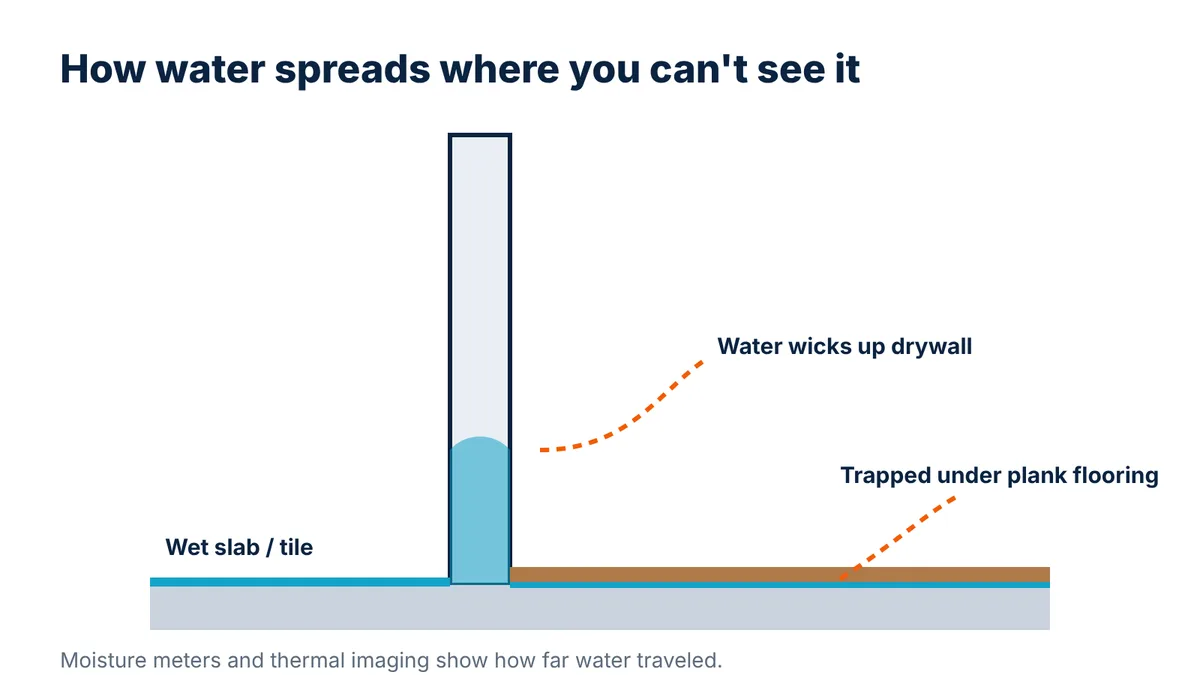
Water above a ceiling spreads along joists, trusses and insulation before it shows through. Blown-in or batt insulation can hold a lot of water and keep the drywall wet from above. That's why ceiling water damage should be checked with moisture meters and thermal imaging across a wider area than the visible stain, and why wet insulation is usually removed.
Ceiling water damage repair process
- Source repair by a roofer, HVAC technician or plumber.
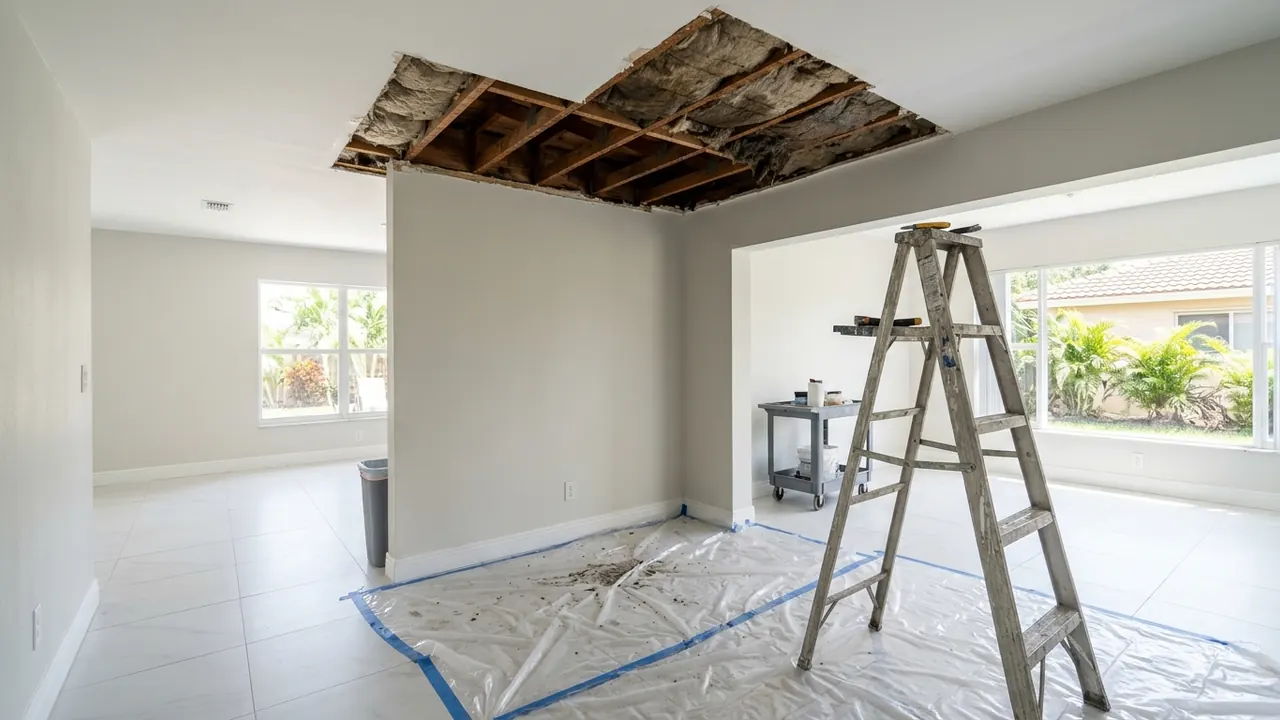
- Controlled removal of sagging or soaked drywall and wet insulation, with plastic sheeting to protect the room.
- Drying of joists, top plates and the remaining drywall (structural drying).
- Mold check on the back side of the drywall and the framing (mold remediation if needed).
- Rebuild: new drywall, texture matching and paint once the area is dry.
Roof leaks after storms
Barrel tile and shingle roofs common in west Miami-Dade can let water in through cracked or displaced tiles, worn underlayment and flashing around penetrations. Wind-driven rain during tropical storms can get in even without visible roof damage. If your ceiling started leaking after a storm, read storm and hurricane water damage and photograph the roof from the ground for your claim. This site does not provide roofing; a licensed roofer should inspect and repair the roof.
Ceiling leaks in condos and apartments
If water is coming from the unit above, tell the neighbor and building management right away. Who pays usually depends on where the leak started and your association's documents. See condo water damage for how unit-to-unit leaks are usually handled.
Questions Tamiami homeowners ask
Should I poke a hole in a bulging ceiling?
Only if it's safe and you're not standing under it, with a bucket ready, and only to relieve a small water bubble. If the ceiling is sagging widely, keep everyone out of the room and let a professional handle it.
Can a water-stained ceiling just be painted?
Not until the leak is fixed and the drywall and insulation are confirmed dry. Painting a wet ceiling hides the problem and can trap moisture that leads to mold.
How do I know if the leak is from the roof or the AC?
A roof leak usually shows up during or after rain. An AC leak happens while the system runs, often on hot days, and is commonly near the air handler or supply vents.
Does insurance cover a ceiling leak?
Sudden damage from a storm or a burst pipe is often covered, but roofs that leak from wear and tear, or long-term leaks, may not be. Report the claim and document the cause.
Who repairs the roof?
A licensed roofer. Water damage restoration covers drying, removing damaged materials and checking for mold inside the home.
Service area: Tamiami, FL
Serving Tamiami in west Miami-Dade, ZIP codes 33175 33182 33184. Mailing address: 14245 SW 128th St #308, Miami, FL 33186.
Open Tamiami, FL in Google Maps →
Helpful guides
Related water damage services
Storm & Hurricane Water Damage · AC Leak Water Damage · Mold Remediation After Water Damage · Condo & Apartment Water Damage · Water damage restoration in Tamiami