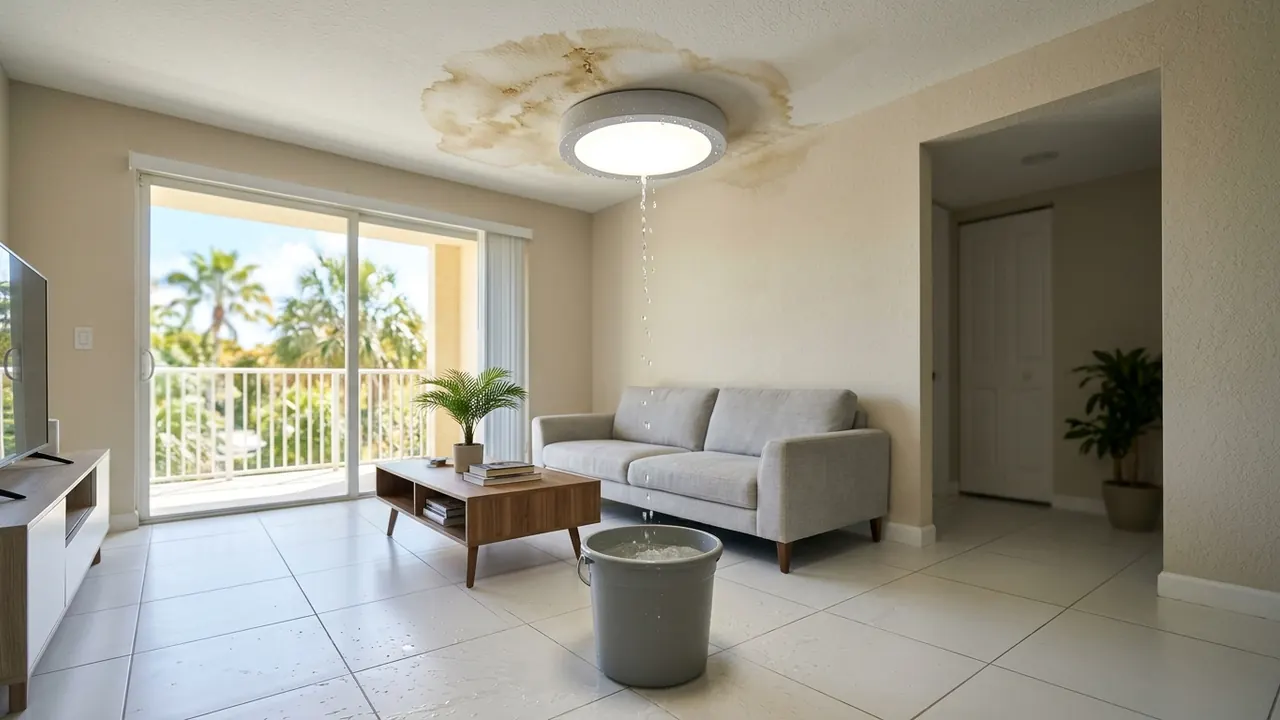
Condo water damage usually involves more than one unit and more than one insurance policy. Stop the water, tell building management and the neighbors affected, and document everything. Drying should start right away in every affected unit. Who pays generally depends on where the leak started and your association's governing documents, so contact your insurer and the association early. Call (786) 732-2700.
Leak in a condo or apartment? Do this
- Stop the water: your unit's shut-off valve may be in a closet, under the water heater or behind an access panel. If you can't find it, call building management or maintenance right away.
- Notify everyone affected: the unit above or below, the association or property manager, and your landlord if you rent.
- Photograph and video the source, the water and every damaged area, with dates.
- Call your insurer (HO-6 for condo owners, HO-4 renters insurance for tenants).
- Start drying quickly, in every affected unit, to prevent mold from spreading through shared walls.
Common sources of condo water damage
- AC air handler or condensate line overflows in mechanical closets (AC leak water damage).
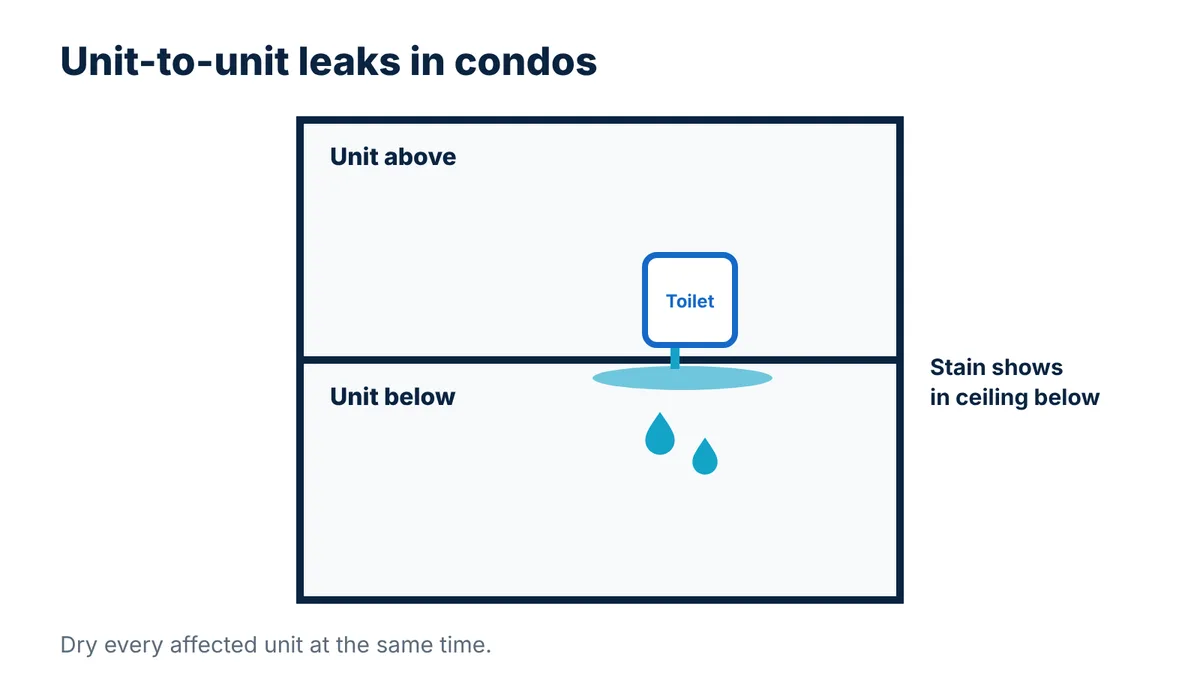
- Toilet supply lines, wax rings and shower pans leaking into the unit below.
- Water heater failures inside the unit.
- Washing machine hoses and dishwasher lines.
- Shared risers, stack pipes and roof drains that belong to the association.
- Window and balcony door leaks during storms.
Who is responsible for water damage in a condo?
There is no single answer, but in general:
| Where the leak started | Often looked at first |
|---|---|
| Inside one unit (toilet, appliance, AC owned by that owner) | That unit owner and their HO-6 policy |
| Common element (shared riser, roof, exterior wall) | The association and its master policy |
| Rented unit | The landlord for the building; the tenant's HO-4 for their belongings |
Florida's condominium law and each association's declaration decide how responsibility is split, and the details matter. This page is general information, not legal advice. Talk to your insurer, your association and, if needed, a Florida attorney.
Restoring water damage across several units
- Moisture mapping in each affected unit, including ceilings below and shared walls.
- Extraction and controlled removal of wet ceiling drywall, insulation, baseboards and pad.
- Drying in every unit at the same time, so moisture doesn't move back through shared walls.
- Clear documentation per unit: photos, readings and a separate scope, which makes it easier for each insurer.
- Coordination with building management for access, shut-offs and common areas.
If you rent
Tell your landlord or property manager in writing right away. They are generally responsible for the building and its plumbing. Your own renters policy may cover your belongings and temporary living costs. Take photos of your damaged items before anything is thrown out.
For large buildings, offices and shops, see commercial water damage.
Questions Tamiami homeowners ask
Water is coming from the unit above me. What should I do?
Knock on the neighbor's door, call building management, and if you can, find the shut-off for that unit or the riser. Photograph the damage in your unit and call your insurer. Start drying as soon as the water stops.
Who pays when a condo leak damages my unit?
It depends on where the leak started and your association's governing documents. Leaks from inside one unit are often the responsibility of that owner, while common-element leaks often fall to the association. Ask your insurer and the association.
What is an HO-6 policy?
An HO-6 policy is condo unit-owner insurance. It typically covers the interior of your unit and your belongings, while the association's master policy covers common elements.
Do both units need drying equipment?
Yes, if water reached both. Drying only one unit can leave moisture in shared walls and ceilings, which can lead to mold.
Can the restoration team work with my building manager?
That's normal. Access to mechanical rooms, shut-off valves and common areas often goes through building management.
Service area: Tamiami, FL
Serving Tamiami in west Miami-Dade, ZIP codes 33175 33182 33184. Mailing address: 14245 SW 128th St #308, Miami, FL 33186.
Open Tamiami, FL in Google Maps →
Helpful guides
- Water Damage in Your Home: What to Do in the First 24 Hours
- Filing a Water Damage Insurance Claim in Florida: A Homeowner's Guide
Related water damage services
Burst Pipe & Plumbing Leak Damage · AC Leak Water Damage · Ceiling & Roof Leak Water Damage · Water Damage Insurance Documentation · Water damage restoration in Tamiami