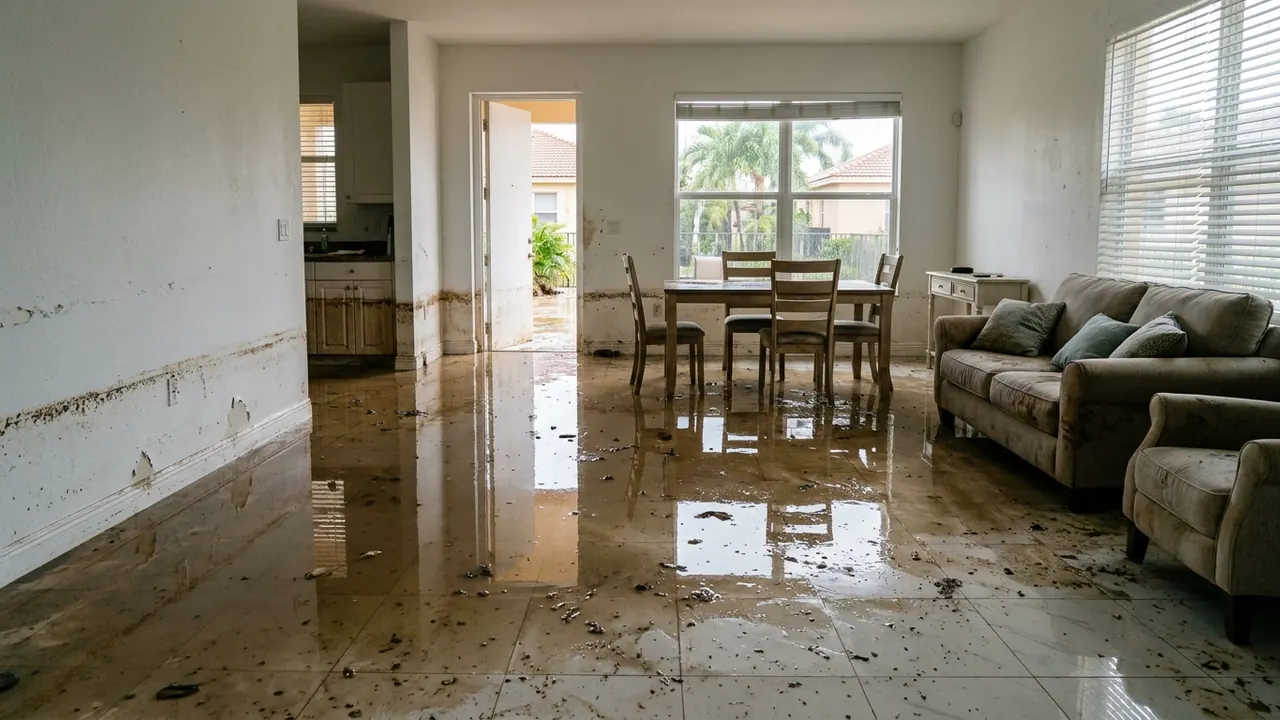
Flood damage restoration is the cleanup of outside water that entered a building. Floodwater is treated as Category 3 (grossly contaminated) water, so porous materials it touched, such as carpet, pad and the lower part of drywall, are usually removed, and every surface is cleaned and sanitized before drying. In Tamiami, heavy summer storms and tropical systems are the usual causes. Stay out of the water if power is on, take photos, and call (786) 732-2700.
What to do first after a flood
Safety first. Never walk through standing water if outlets, appliances or cords are submerged. If you can't reach your electrical panel from a dry spot, call FPL or wait for help. Floodwater can carry sewage, so wear rubber boots and gloves and keep children and pets away.
- Photograph everything before moving it, including the water line on walls.
- Call your insurer. Most homeowners policies exclude flood; flood coverage usually comes from a separate NFIP or private flood policy. Report the loss either way.
- Remove what you safely can: valuables, papers, medicines and electronics.
- Don't run your HVAC if the air handler, ducts or return were under water.
- Throw out food that touched floodwater.
Why homes flood in Tamiami
Tamiami sits on flat, low ground in west Miami-Dade at an average elevation of only about 7 feet. When several inches of rain fall in a short time, swales and storm drains can fill and water collects in streets and yards. During the June 2024 rain event, nearby Sweetwater recorded more than 7.5 inches of rain, and parts of Kendall got 5 to 7 inches. A Miami Herald analysis of a decade of flood complaints found that nearly 60% came from outside FEMA-designated flood zones. In other words, not being in a mapped flood zone doesn't mean a home can't flood.
The usual entry points are sliding doors, garage doors, low thresholds and the slab edge. Tropical storms and hurricanes add wind-driven rain through windows and roofs; see storm and hurricane water damage.
What proper flood cleanup includes
- Inspection and safety check: electrical hazards, structural concerns and the height of the water line.
- Water extraction with pumps and extractors (see emergency water extraction).
- Removal of contaminated porous materials: carpet and pad, upholstered items that can't be cleaned, and baseboards.
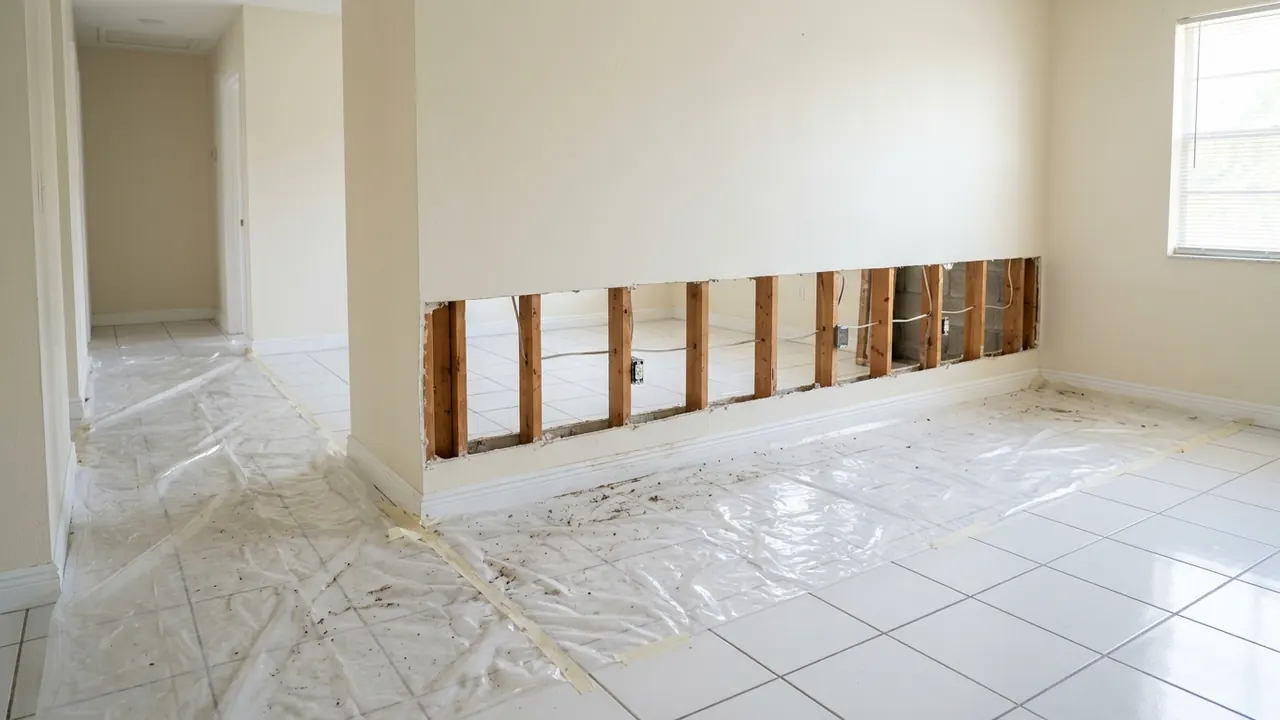
- Flood cuts: drywall is cut out above the water line, commonly 12 to 24 inches above it, so wet insulation and framing can be cleaned and dried.
- Cleaning and antimicrobial treatment of slabs, block walls, studs and every surface the water touched.
- Structural drying with air movers and dehumidifiers until readings are dry.
- Documentation: photos, moisture logs and a list of removed items for your claim.
What can be saved and what can't
| Item | Usually | Why |
|---|---|---|
| Concrete slab, block walls, tile, terrazzo | Cleaned and dried | Non-porous or durable; sanitize and dry |
| Wood studs and framing | Cleaned and dried | Can be treated and dried if sound |
| Drywall and insulation below the flood line | Removed | Absorbs contaminated water and hides mold |
| Wall-to-wall carpet and pad | Removed | Can't be reliably sanitized after Category 3 water |
| Solid wood furniture | Often cleaned | Depends on finish and time in water |
| Mattresses, upholstered furniture, stuffed toys | Usually discarded | Porous and hard to sanitize |
Flood insurance basics for Tamiami homeowners
Standard homeowners policies generally exclude damage from rising outside water. That coverage usually comes from a National Flood Insurance Program (NFIP) or private flood policy, which have their own deductibles and limits, especially for contents and finished items. Rain that enters through a storm-damaged roof or window may fall under your homeowners policy instead. Report the loss promptly and keep every photo and receipt. Our insurance documentation guide explains what to gather.
Questions Tamiami homeowners ask
Is floodwater always Category 3?
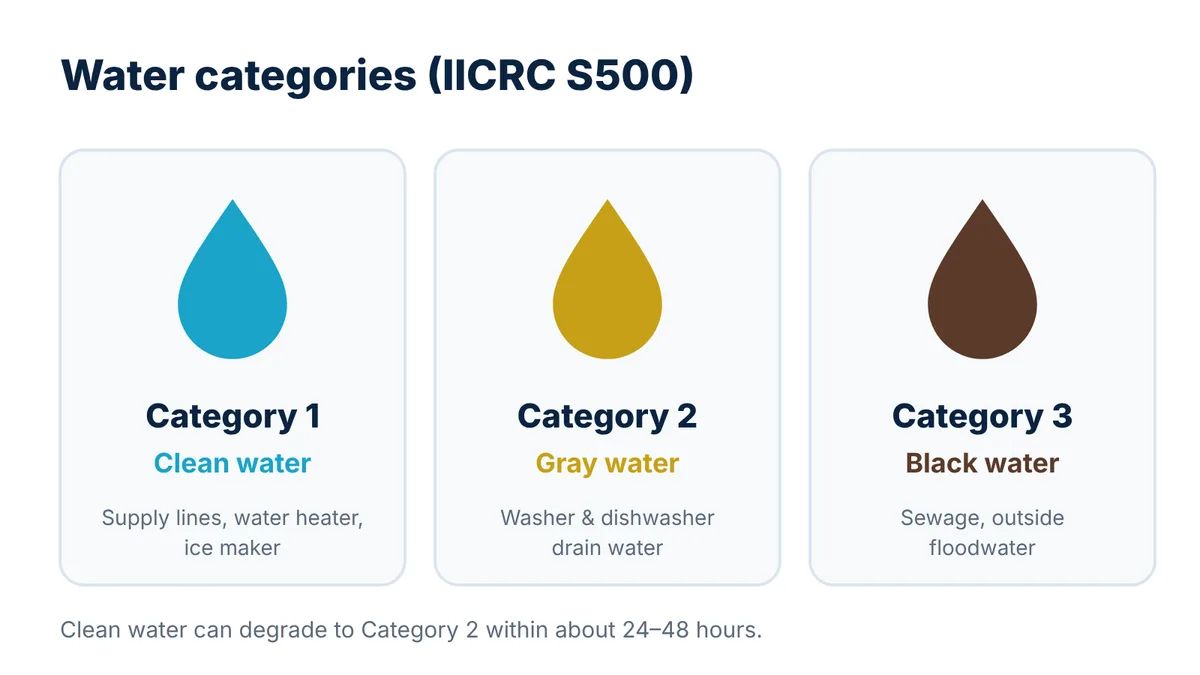
Yes. Under the IICRC S500 standard, water that comes from outside, such as rising stormwater or groundwater, is treated as grossly contaminated (Category 3) because it can carry sewage, chemicals and bacteria.
Do I have to tear out drywall after a flood?
Usually the lower part, yes. Drywall and insulation that absorbed floodwater are commonly cut out above the water line so the wall cavity can be cleaned and dried.
Will homeowners insurance pay for flood damage?
Most homeowners policies exclude rising outside water. Flood coverage typically comes from a separate flood policy. Wind-driven rain through a damaged roof or window may be treated differently, so check with your insurer.
My home isn't in a flood zone. Can it still flood?
Yes. A Miami Herald analysis of flood complaints in South Florida found that nearly 60% came from outside FEMA-designated flood zones. Heavy local rainfall can overwhelm drainage anywhere.
How soon does mold grow after a flood?
Mold can start within 24 to 48 hours on wet materials, especially in warm, humid weather. Fast extraction, removal of soaked materials and drying are the best prevention.
Service area: Tamiami, FL
Serving Tamiami in west Miami-Dade, ZIP codes 33175 33182 33184. Mailing address: 14245 SW 128th St #308, Miami, FL 33186.
Open Tamiami, FL in Google Maps →
Helpful guides
- Water Damage Categories and Classes, Explained Simply
- Filing a Water Damage Insurance Claim in Florida: A Homeowner's Guide
- Hurricane Season Water Damage Prep for Tamiami Homes
Related water damage services
Emergency Water Extraction · Storm & Hurricane Water Damage · Sewage Backup Cleanup · Mold Remediation After Water Damage · Water damage restoration in Tamiami