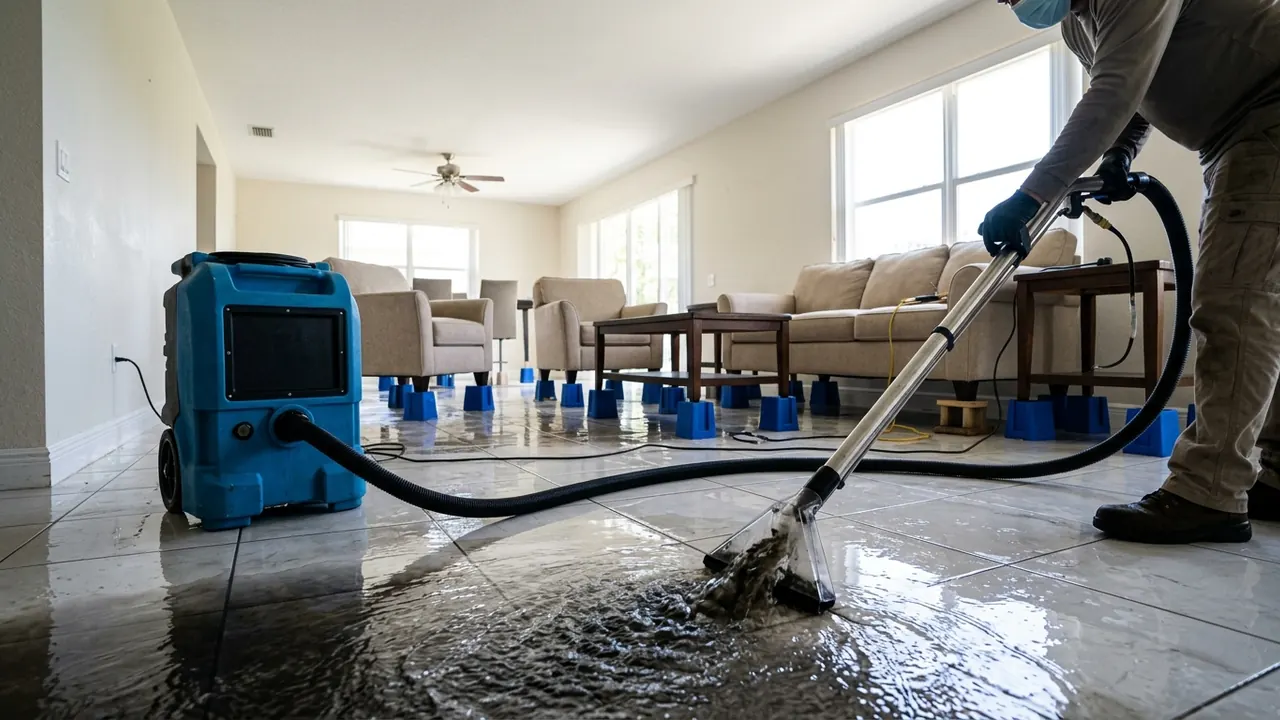
Emergency water extraction is the first step of water damage restoration: powerful pumps and extractors remove standing and absorbed water before drying equipment goes in. In Tamiami's heat and humidity, wet materials can start growing mold within 24 to 48 hours, so extraction should start the same day. Stop the source if you safely can, then call (786) 732-2700.
What to do before the extraction team arrives
- Stop the water. Close the fixture valve or the main shut-off. In most Tamiami houses the main is near the front hose bib or where the line enters from the meter at the street. If a county water main or meter is leaking, Miami-Dade Water and Sewer takes calls at 305-274-9272.
- Make it safe. If water is near outlets, power strips or the electrical panel, do not walk through it. Switch off breakers to wet rooms only if you can reach the panel from a dry spot.
- Document. Take wide photos and short videos of every wet room before anything is moved. These help your insurance claim.
- Lift and move. Get electronics, papers, rugs and furniture with wooden legs off wet floors. Put foil or plastic under furniture feet that can't be moved.
- Don't use a household vacuum. A regular vacuum is not built for water and can be a shock hazard.
How professional water extraction works
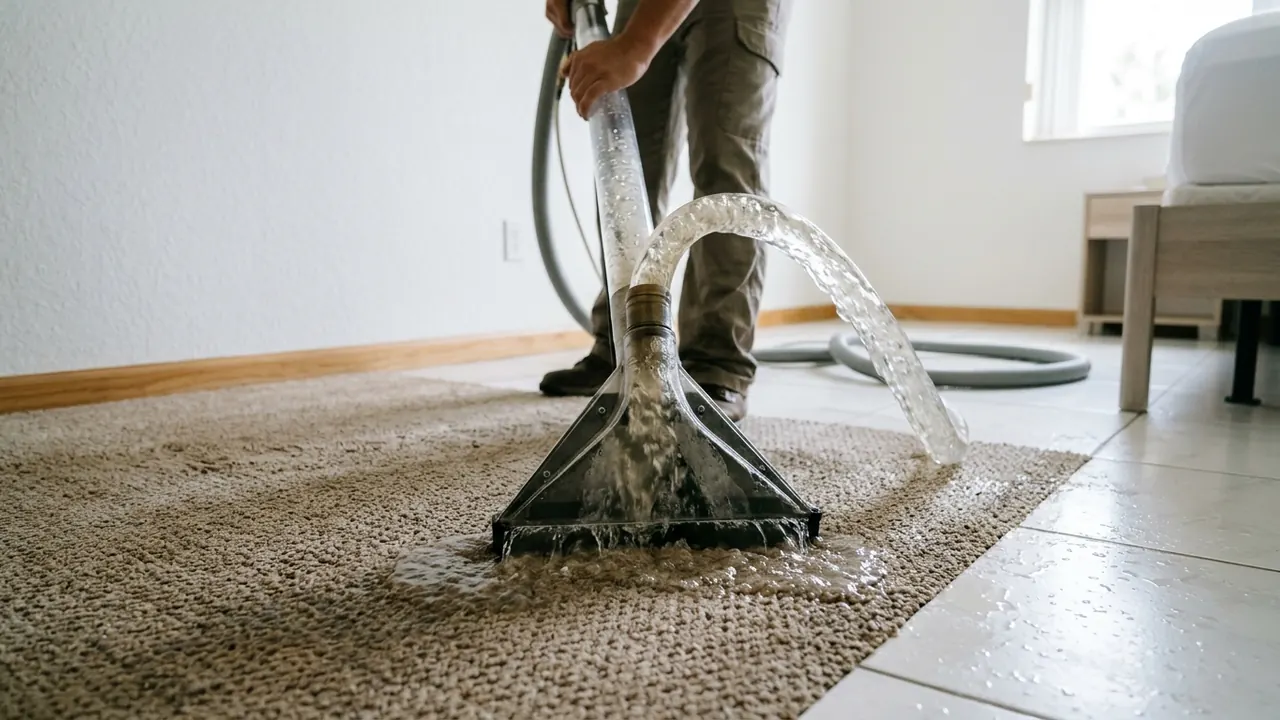
Extraction is not mopping. The goal is to remove as much liquid water as possible, because pulling water out mechanically is many times faster than evaporating it later with fans and dehumidifiers. A thorough extraction usually includes:
- Source and category check. Is the water clean (a supply line), gray (a washing machine or dishwasher) or black (sewage or outside floodwater)? The category decides what can be saved and what protective gear is needed.
- Submersible pumps for deep standing water, such as a flooded garage or a sunken living room.
- Truck-mounted or portable extractors with floor wands for tile, terrazzo and hard surfaces.
- Weighted or ride-on extraction tools that press water out of carpet and pad, so less water stays behind for the dryers.
- Moisture mapping with meters and thermal imaging to find where water has wicked into walls, cabinets and under flooring.
- Moving contents out of the wet area and blocking furniture so drying air can reach the floor.
Why speed matters in Tamiami homes
Most homes around Tamiami, from the SW 8th Street corridor to the streets near Tamiami Park and FIU, are concrete block on a concrete slab, finished with tile, terrazzo, laminate or engineered wood. Concrete and block don't rot, but they hold moisture for a long time. Drywall, baseboards, cabinet toe-kicks and wood flooring do soak it up, and South Florida's warm, humid air gives mold everything it needs.
The EPA advises drying wet building materials within 24 to 48 hours to limit mold growth. Clean water also doesn't stay clean: under the IICRC S500 restoration standard, Category 1 water can turn into Category 2 within 24 to 48 hours as it picks up contaminants from the floor and building materials. A same-day start keeps more of your home in the "dry and save" column instead of the "cut out and replace" column.
Common reasons for water extraction calls in Tamiami
| Source | Typical water category | What usually gets wet |
|---|---|---|
| Burst or leaking supply line | Category 1 (clean) at first | Kitchen, bathroom, hallway floors and lower drywall |
| AC air handler or drain line overflow | Category 1–2 | Hall closets, ceilings below attic units, nearby carpet |
| Water heater failure | Category 1 | Garage, laundry room, adjoining walls |
| Washing machine or dishwasher overflow | Category 2 (gray) | Laundry, kitchen cabinets, adjacent rooms |
| Heavy rain or flooding coming inside | Category 3 (black) | Entire ground floor, baseboards, drywall up to the water line |
| Toilet or sewer backup | Category 3 (black) | Bathrooms, hallways, anything the water touched |
What happens after the water is out
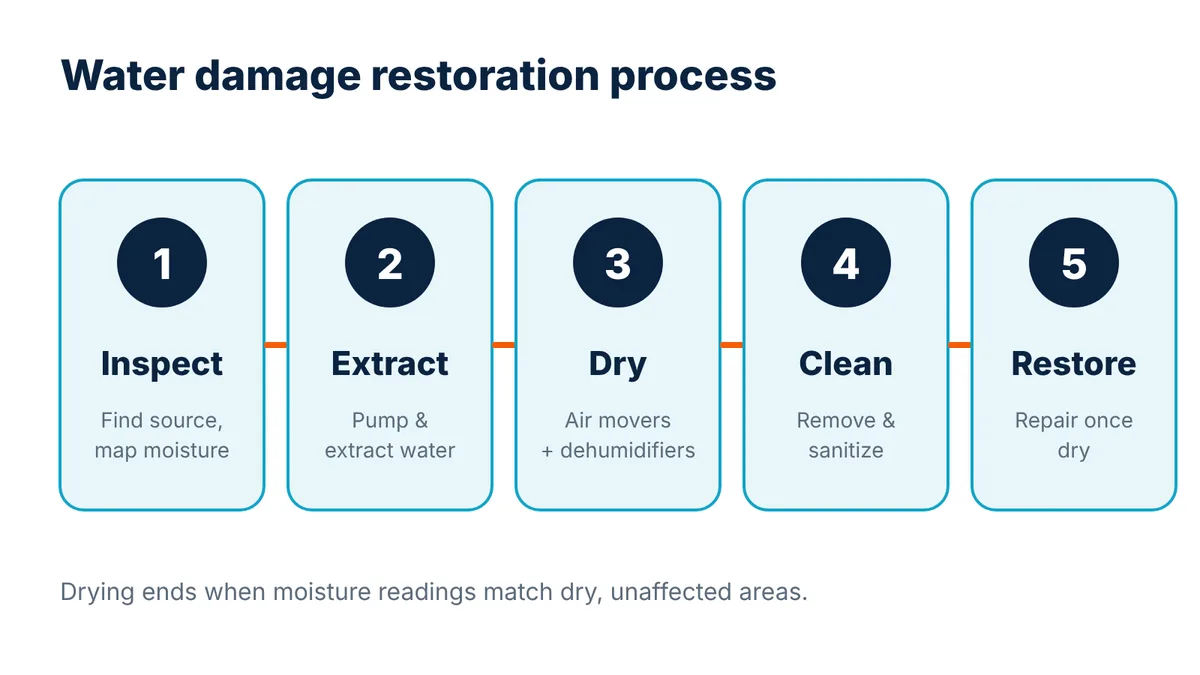
Extraction is step one. Once the visible water is gone, the job moves into structural drying and dehumidification: air movers and dehumidifiers are placed, and moisture readings are taken each day until materials reach a dry standard. Wet carpet pad, swollen baseboards and drywall that wicked contaminated water are usually removed so the cavities behind can dry. If the water came from outside or from a sewer line, the area also needs cleaning and sanitizing as described on our sewage cleanup and flood damage restoration pages.
What to ask before work starts
- What category and class of water damage is this, and what does that mean for my floors and walls?
- What will be removed and what will be dried in place?
- Will you take moisture readings and photos I can give my insurance company?
- Can I see a written scope or estimate before work begins?
- Who will do the rebuild, if any is needed?
Florida law changed in 2023: for property policies issued on or after January 1, 2023, homeowners can no longer sign an assignment of benefits (AOB) that hands their claim to a contractor. Read our insurance documentation page before you sign anything.
Questions Tamiami homeowners ask
How fast should water be extracted after a leak?
As soon as possible, ideally the same day. Mold can begin growing on wet materials within 24 to 48 hours in warm, humid conditions, and clean water can become contaminated in that same window.
Can I extract the water myself with a wet vac?
For a small spill on tile, a wet/dry vac and towels may be enough. For water under flooring, in carpet pad, inside walls or across several rooms, professional extractors and moisture meters find and remove far more water than household tools.
Will my tile or terrazzo floor be ruined?
Usually not. Tile and terrazzo themselves tolerate water well. The concern is water trapped under loose tiles, in grout lines, and in baseboards and drywall next to the floor. Those areas are checked with moisture meters.
Does homeowners insurance cover water extraction?
Many policies cover sudden and accidental water damage, such as a burst pipe, but not long-term leaks or outside flooding (which usually needs separate flood insurance). Check your policy and report the claim promptly.
Do I need to leave my home during extraction?
Usually not for clean water. For sewage or floodwater (Category 3), keep children, pets and anyone with health concerns out of the affected area until it has been cleaned.
Service area: Tamiami, FL
Serving Tamiami in west Miami-Dade, ZIP codes 33175 33182 33184. Mailing address: 14245 SW 128th St #308, Miami, FL 33186.
Open Tamiami, FL in Google Maps →
Helpful guides
- Water Damage in Your Home: What to Do in the First 24 Hours
- Water Damage Categories and Classes, Explained Simply
- How Long Does Water Damage Restoration Take?
Related water damage services
Structural Drying & Dehumidification · Flood Damage Restoration · Burst Pipe & Plumbing Leak Damage · Wet Carpet & Flooring Drying · Water damage restoration in Tamiami