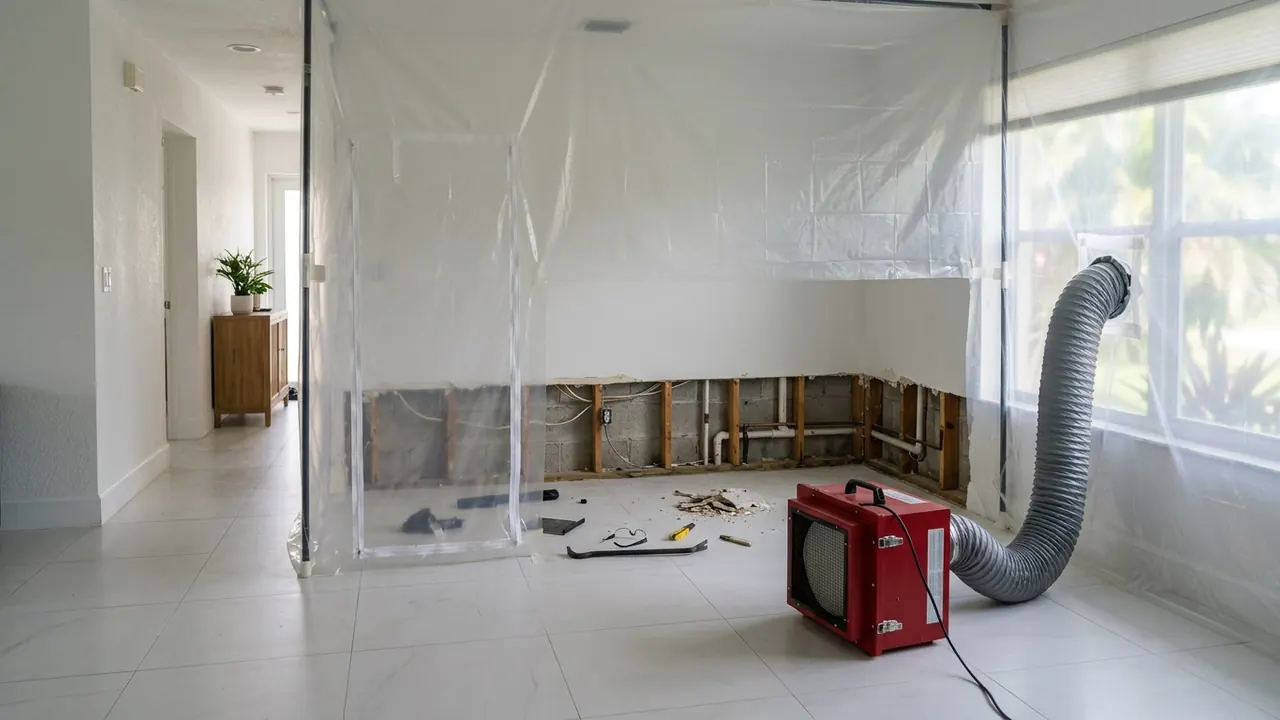
Mold remediation is the safe removal of mold growth and the materials it has damaged, followed by fixing the moisture problem that caused it. In Florida, mold remediation and mold assessment done for pay require a license from the Department of Business and Professional Regulation (DBPR). Small spots on hard surfaces can be cleaned by homeowners, but larger growth, or mold after sewage or floodwater, should be handled professionally. Call (786) 732-2700 to talk it through.
Found mold? What to do first
- Find and stop the moisture: a leak, an AC drip, a roof problem or high indoor humidity. Mold comes back if the moisture does.
- Don't disturb it. Scrubbing or dry-brushing large patches can spread spores through the home.
- Don't just paint over it or spray bleach on porous drywall; that hides growth without removing it.
- Keep people with asthma, allergies or weakened immune systems away from the area.
- Photograph the growth and the source for your records.
Why mold grows so fast in Tamiami homes
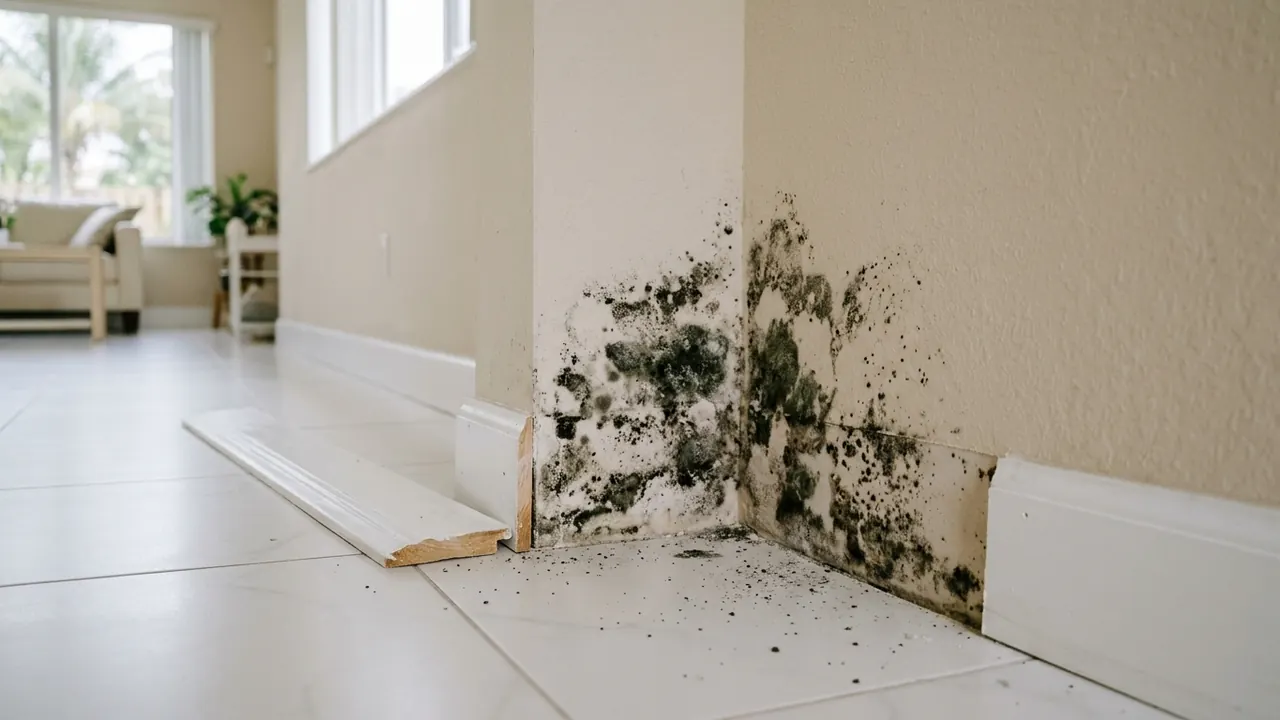
West Miami-Dade's warm temperatures and high humidity give mold good growing conditions most of the year. The EPA advises drying wet building materials within 24 to 48 hours to prevent mold growth. Common hiding spots after water damage include:
- Behind baseboards and the lower few inches of drywall after a floor leak.
- Inside AC closets and around air handler cabinets (see AC leak water damage).
- Under kitchen and bathroom sink cabinets.
- Above ceilings after a roof or attic AC leak.
- Under carpet pad and behind furniture against exterior walls.
Florida mold licensing: what homeowners should know
Florida regulates mold-related services under Chapter 468, Part XVI of the Florida Statutes, administered by the DBPR. Key points:
- People who perform mold assessment or mold remediation for compensation must hold the appropriate license. DBPR licenses individuals, not companies.
- Assessment and remediation are separate. A mold assessor who inspected a property generally can't also do the remediation on it, and a remediator generally can't assess a property it remediated within the previous 12 months. This keeps the inspection independent.
- A homeowner can remediate mold on their own property without a license.
- You can check any license on the DBPR's online license search before work begins.
Ask for the remediator's name and Florida license number, and keep it with your paperwork.
How mold remediation works
- Assessment to find the extent of growth and the moisture source; for larger jobs, an independent licensed assessor may write a remediation protocol.
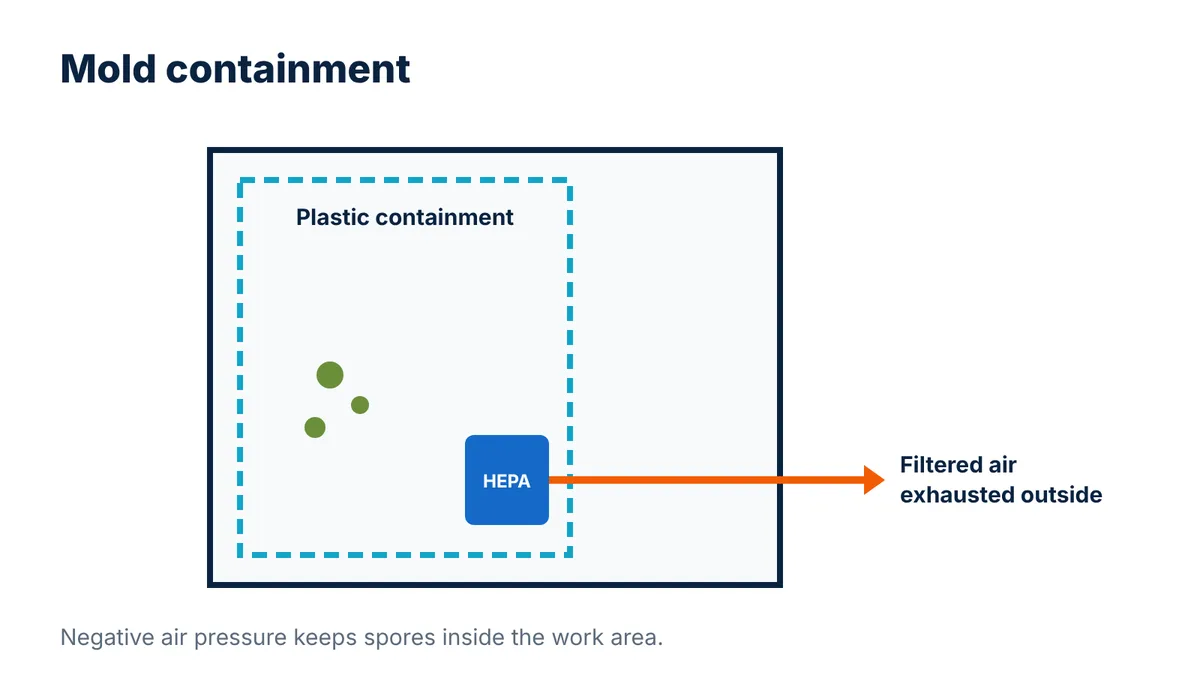
- Containment with plastic sheeting and negative air pressure so spores don't spread to clean rooms.
- HEPA air filtration during the work.
- Removal of moldy porous materials such as drywall, insulation, carpet pad and baseboards.
- Cleaning of remaining surfaces such as framing, block and slab with HEPA vacuuming and wiping.
- Drying of the area (structural drying).
- Clearance: on larger jobs, a post-remediation assessment confirms the work met the protocol.
When is it a do-it-yourself job?
EPA guidance suggests that a homeowner can usually clean up small areas of mold, about 10 square feet or less, on hard, non-porous surfaces with detergent and water, as long as the moisture source is fixed. Call a professional when the area is larger, when mold is on drywall or inside walls, when it followed sewage or floodwater, when it's in the HVAC system, or when anyone in the home has health concerns.
Preventing mold after water damage
- Start water extraction and drying the same day.
- Keep indoor humidity under control with your AC running and filters changed.
- Fix slow leaks under sinks, around toilets and at the air handler right away.
- Don't reinstall baseboards, flooring or drywall until moisture readings are dry.
Questions Tamiami homeowners ask
Do you need a license to do mold remediation in Florida?
Yes, for anyone doing mold remediation or mold assessment for pay. Florida's DBPR licenses mold assessors and mold remediators under Chapter 468, Part XVI of the Florida Statutes. Homeowners working on their own property are exempt.
Can the same company test and remove the mold?
Florida separates the roles. A mold assessor who inspected a property generally can't also remediate it, and a remediator generally can't assess a property it remediated within 12 months.
How fast does mold grow after a leak?
Mold can begin growing within 24 to 48 hours on wet materials in warm, humid conditions, which is why fast drying matters so much in Miami-Dade.
Is bleach enough to kill mold?
Bleach doesn't penetrate porous materials like drywall and wood, and it doesn't fix the moisture. Moldy porous materials are usually removed, and hard surfaces are cleaned.
Does insurance cover mold?
Many Florida policies limit or exclude mold coverage, especially when it comes from long-term leaks. Mold that results from a covered, sudden water loss may be partly covered. Check your policy's mold limit.
Service area: Tamiami, FL
Serving Tamiami in west Miami-Dade, ZIP codes 33175 33182 33184. Mailing address: 14245 SW 128th St #308, Miami, FL 33186.
Open Tamiami, FL in Google Maps →
Helpful guides
Related water damage services
Structural Drying & Dehumidification · Flood Damage Restoration · AC Leak Water Damage · Ceiling & Roof Leak Water Damage · Water damage restoration in Tamiami