Under the IICRC S500 restoration standard, water damage is described two ways. The category (1, 2 or 3) is about contamination: clean, gray or black water. The class (1 to 4) is about how much water was absorbed and how hard drying will be. Category decides what can be saved; class decides how much drying equipment is needed.
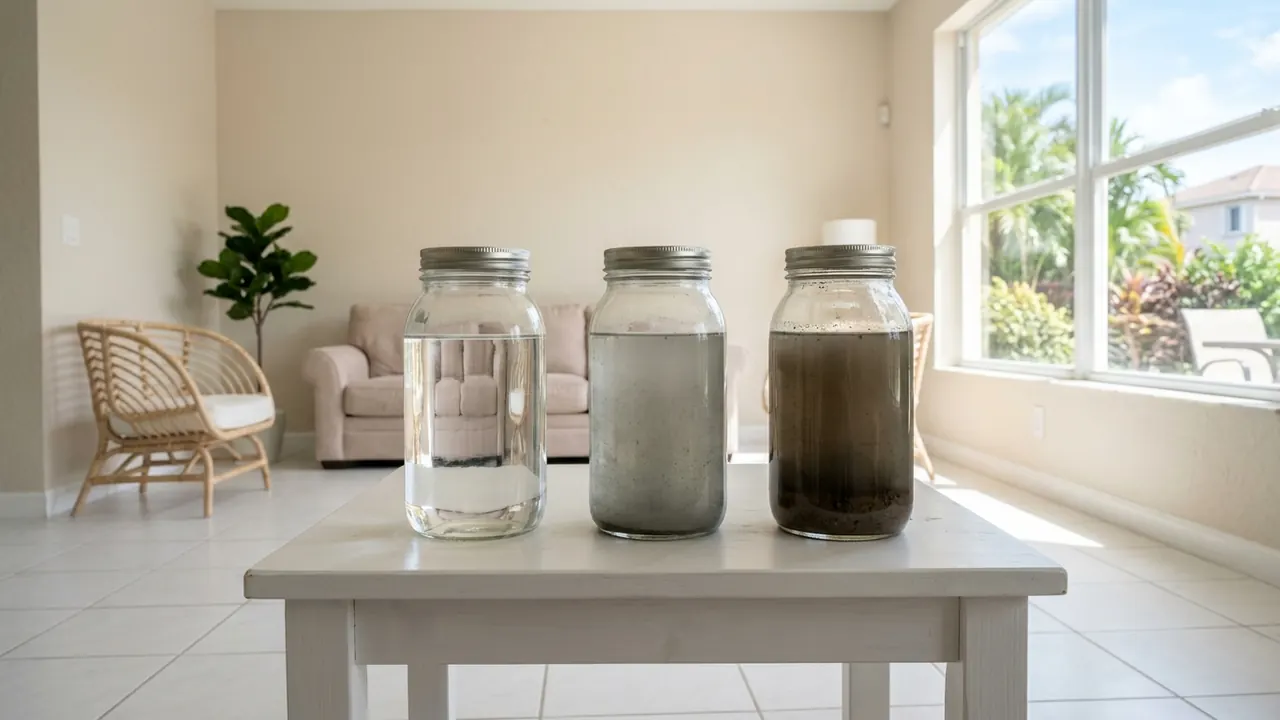
The three water categories
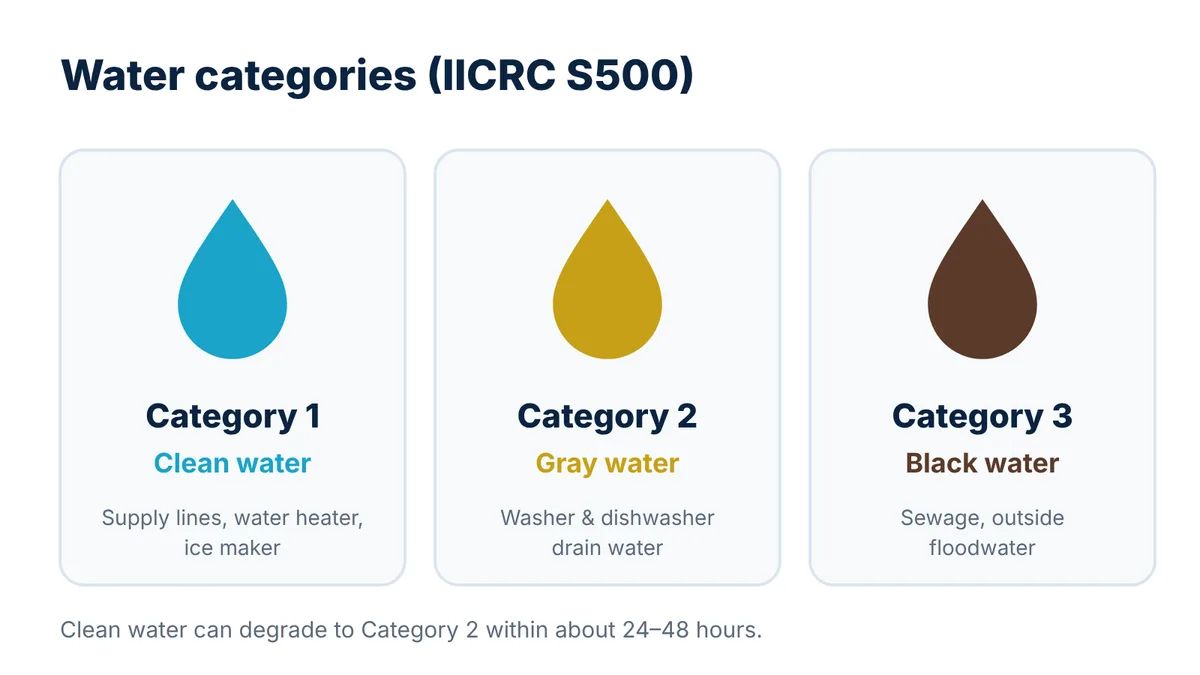
| Category | What it is | Examples in Tamiami homes | What usually happens |
|---|---|---|---|
| Category 1 (clean) | From a sanitary source; low risk | Burst supply line, water heater, ice maker line, rain through a roof (at first) | Most materials can be dried in place if work starts fast |
| Category 2 (gray) | Significant contamination; can cause discomfort or illness | Washing machine or dishwasher drain water, toilet overflow with urine but no feces, aquarium | Cleaning and antimicrobial treatment; carpet pad usually replaced |
| Category 3 (black) | Grossly contaminated; can contain pathogens | Sewage, toilet backflow with feces, rising floodwater from outside | Porous materials it touched are removed; full sanitizing |
Why clean water doesn't stay clean
Water picks up contamination as it sits and touches floors, carpet and building materials. The IICRC S500 notes that Category 1 water can degrade to Category 2 within about 24 to 48 hours. In a warm Tamiami home, that happens quickly. This is one of the biggest reasons to start water extraction the same day.
The four classes of water damage
| Class | Meaning | Example |
|---|---|---|
| Class 1 | Least water; small area; little absorption | Dishwasher leak on tile, caught fast |
| Class 2 | Larger area; carpet and pad wet; water wicked into walls up to about 24 inches | Supply line ran overnight through a hallway |
| Class 3 | Most water; often from above; ceilings, walls, insulation and floors saturated | Attic AC overflow soaking ceilings and carpet |
| Class 4 | Specialty drying; dense materials like concrete, hardwood and plaster hold water | Long-running leak soaking the slab under wood flooring |
The class shapes the drying plan: how many air movers and dehumidifiers, whether specialty floor-drying systems are needed, and how long drying may take.
Putting it together
A loss is always described by both, for example "Category 1, Class 2" for a clean supply line leak that soaked a hallway and the bottom of the walls, or "Category 3, Class 2" for a sewage backup across a bathroom and bedroom. The category tells you what's safe to keep; the class tells you how big the drying job is.
Special situations
- Floodwater from outside is always treated as Category 3. See flood damage restoration.
- Mold, asbestos and lead are treated as special or regulated situations with their own procedures. In Florida, mold remediation for pay requires a DBPR license; see mold remediation.
- Older homes: before removing old drywall texture, ceiling texture or flooring, ask whether testing for asbestos is needed.
Not sure what category your water is? Call (786) 732-2700.
Frequently asked questions
What is Category 3 water?
Category 3, or black water, is grossly contaminated water that can contain pathogens, such as sewage and floodwater from outside. Porous materials it touches are usually removed.
Is rainwater clean water?
Rain that comes straight through a roof is usually treated as Category 1 at first, but it can pick up contamination from insulation and building materials. Rising floodwater from outside is Category 3.
Can carpet be saved after Category 2 water?
Sometimes, if it's cleaned and dried quickly, but the pad is usually replaced. After Category 3 water, carpet and pad are removed.
What does Class 4 water damage mean?
Class 4 means water soaked dense materials such as concrete, hardwood or plaster that release moisture slowly and may need specialty drying.
Who created the water damage categories?
They come from the ANSI/IICRC S500 Standard for Professional Water Damage Restoration, the industry's main reference standard.
More water damage guides
- Water Damage in Your Home: What to Do in the First 24 Hours
- Filing a Water Damage Insurance Claim in Florida: A Homeowner's Guide
- AC Leaking Water Inside the House? Causes and What to Do
- Hurricane Season Water Damage Prep for Tamiami Homes
- How Long Does Water Damage Restoration Take?
Related services: Emergency Water Extraction · Flood Damage Restoration · Sewage Backup Cleanup · Water damage restoration in Tamiami