In the first 24 hours after water damage: make the area safe (power off to wet rooms), stop the water at the source or main shut-off, photograph everything, report the claim, move valuables, and start extraction and drying. Mold can start growing within 24 to 48 hours on wet materials in warm, humid weather, so drying should begin the same day.
Hour 0–1: safety and stopping the water
Before anything else, make sure nobody gets hurt. Water and electricity are a dangerous mix, and wet tile and terrazzo floors are slippery.
- Electricity: if water is near outlets, cords or appliances, switch off the breakers for those rooms, but only if you can reach the panel without standing in water.
- Gas: if you smell gas, leave the house and call 911 or your gas utility from outside.
- Stop the water: close the valve at the fixture or turn off the main shut-off. In many Tamiami houses, the main is where the water line comes in from the meter near the street. In a condo, it may be in a closet or controlled by building management.
- Sewage or floodwater: keep children and pets away, and wear gloves and boots.
Hour 1–2: document before you move anything
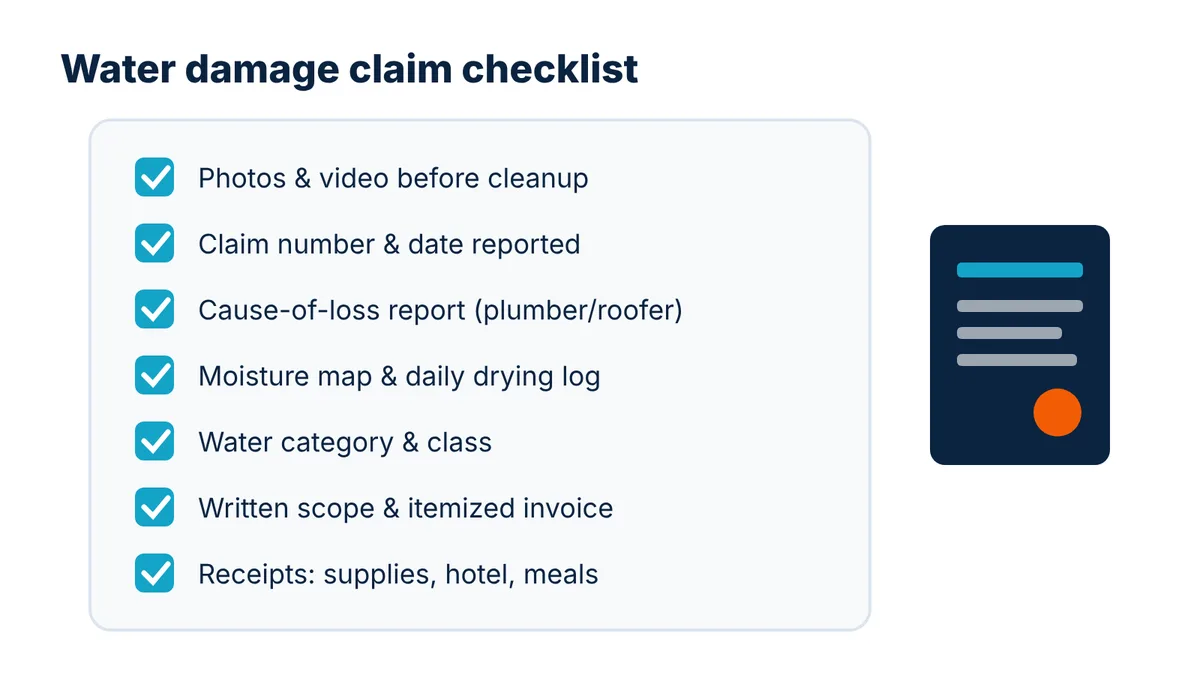
Photos taken before cleanup are the best evidence for an insurance claim. Take wide shots of each room, close-ups of damaged items and the source of the leak, and a short video walking through the house. If you can, photograph the water line on walls and furniture. Write down the time you found the water.
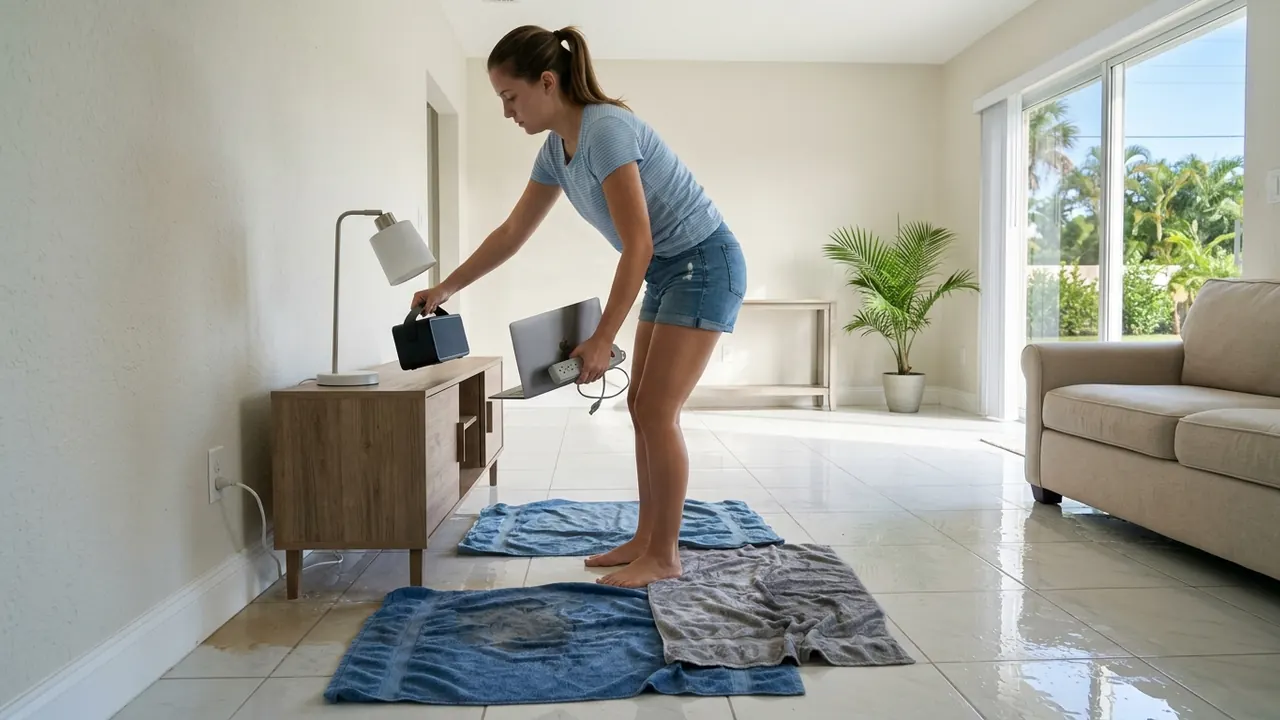
Hour 2–4: protect what you can
- Move electronics, documents, photos and medicines to a dry place.
- Lift rugs and get furniture off wet floors; put foil or plastic under legs of furniture you can't move.
- Open drawers and cabinet doors in wet areas so air can reach inside.
- Remove standing water from tile with towels or a wet/dry vac. Don't use a household vacuum.
- Throw out any food that touched floodwater or sewage.
Hour 4–8: call your insurer and a restoration team
Report the loss and write down your claim number. Ask your insurer what they need. Most policies expect you to take reasonable steps to prevent further damage, which includes drying, so you don't need to wait for an adjuster to start mitigation.
When you call a restoration company, have this ready: where the water came from, how long it ran, which rooms are wet and what kind of flooring you have. In Florida, property policies issued on or after January 1, 2023 no longer allow you to sign an assignment of benefits to a contractor, so read work authorizations carefully. See our insurance documentation page.
Hour 8–24: extraction and drying start
Professional water extraction removes the bulk water from floors, carpet and pad. Then structural drying begins: air movers along wet walls, dehumidifiers to pull moisture out of the air, and moisture readings to track progress. Keep doors and windows closed and the equipment running, because outdoor air in Miami-Dade is usually humid.
| Time | Priority |
|---|---|
| 0–1 hour | Safety, power, stop the water |
| 1–2 hours | Photos and video |
| 2–4 hours | Protect belongings, remove surface water |
| 4–8 hours | Report the claim, call for extraction and drying |
| 8–24 hours | Extraction done, drying equipment running |
Common mistakes to avoid
- Waiting for the adjuster before drying.
- Throwing things away before photographing them.
- Opening windows to "air it out" in humid weather.
- Painting or reinstalling baseboards before the walls are confirmed dry.
- Signing paperwork you don't understand.
Water in your home right now? Call (786) 732-2700 and ask about same-day service in Tamiami.
Frequently asked questions
How long does it take for mold to grow after water damage?
Mold can start growing within 24 to 48 hours on wet materials in warm, humid conditions like Miami-Dade's. That's why extraction and drying should begin the same day.
Should I turn off my AC after water damage?
Keep it running at a normal setting to help control humidity, unless the air handler, ducts or return were flooded or contaminated. In that case, turn it off and have it checked.
Do I need to leave my house?
Not usually for clean-water leaks. For sewage, floodwater or widespread damage, it may be safer to stay elsewhere until cleanup is done. Ask your insurer about additional living expenses.
Can I start cleanup before the insurance adjuster comes?
Yes. Photograph everything first and keep samples if asked. Policies generally require you to prevent further damage.
What's the most important thing to do first?
Make the area safe and stop the water. Everything else, including documentation and drying, comes after that.
More water damage guides
- Water Damage Categories and Classes, Explained Simply
- Filing a Water Damage Insurance Claim in Florida: A Homeowner's Guide
- AC Leaking Water Inside the House? Causes and What to Do
- Hurricane Season Water Damage Prep for Tamiami Homes
- How Long Does Water Damage Restoration Take?
Related services: Emergency Water Extraction · Structural Drying & Dehumidification · Water Damage Insurance Documentation · Water damage restoration in Tamiami